What tools do henna artists use to create their work? You may remember seeing Antoinette Hippe showing off her acrylic paint henna cones to you. Typically, henna cones are a trianglar pieces of celophane rolled into a cylidrical shape, but Antoinette uses a thick, plastic material which she heat-seals into a cone shape. Here’s a clip of the Magpie’s cones:
The typical kind of cone that henna artists use looks like this:
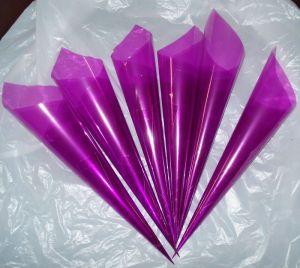
You can see how the typical henna cone is made in Victoria Welch’s video bellow. Victoria is an exceptional henna goddess hailing from Minnessota. Here’s her video on rolling henna cones:
Some henna artists use cellophane cut into rectangles. Henna Caravan owner Flavia McQueen is particularly skilled at rolling this type of henna cone. Her website, www.hennacaravan.com, is a fantastic place to find PPD free henna that is body safe. Here’s a video of Flavia rolling her cones:
Another tool that’s used frequently in the states is the Jacquard bottle, which looks like this:
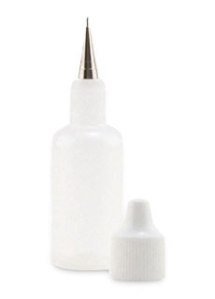
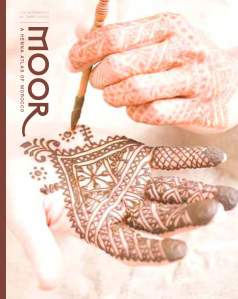
In Morocco and other areas in Northern Africa, you may see henna artsits using sticks to apply henna. These sticks usually have a sanded tip, or the tip is made blunt by other means. Henna is simply “painted,” or dragged across the skin with the stick. Here’s what the henna stick looks like. This image is from the the cover of Lisa Butterworth and Nic Cartier’s text Moor: A Henna Atlas of Morocco:
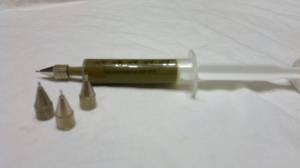
Another tool that is frequently used in Morocco and in North Africa is the syringe. Henna is squeezed from the tube gradually, and drapped onto the skin to create designs. It is very similar to using a Jacquard bottle. Here’s what a henna syringe looks like:
Students from previous workshops that I’ve lead asked me, “Which is the best? Which is better?” The answer to these questions is that the best tool is the tool that suits you. Don’t be afraid to experiment with different tools. Perhaps you find that using a henna cone is more natural and less strenuous on her hand; perhaps you like how the Jacquard bottle creates nice, straight lines. What’s important is that you use only all natural henna paste that is PPD free.
 Northern Mehndi